Opening Hours
9 am to 7 pm Sunday 9 am to 1 pm

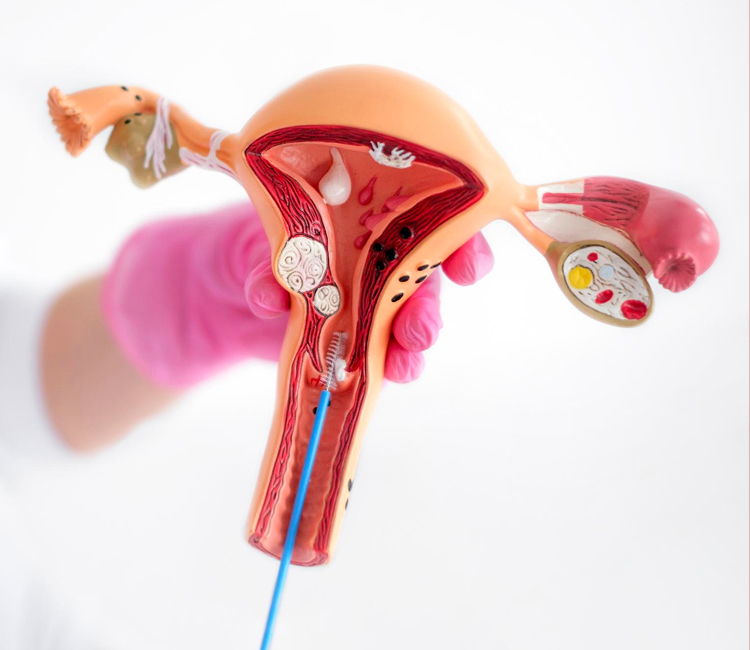
An ovarian cyst is a fluid-filled sac or pocket that develops on or within an ovary. Ovarian cysts are common in women of reproductive age and are often harmless. Many cysts resolve on their own without treatment, while some may require medication or surgery depending on their size, type, symptoms, and risk of complications.
The ovaries are two small reproductive organs located on either side of the uterus. They have two main functions:
During the normal menstrual cycle, follicles develop in the ovaries, and one usually releases an egg during ovulation. Sometimes these follicles continue to grow instead of disappearing, forming a cyst.
These develop as part of the normal menstrual cycle and are usually benign.
These are not related to the normal menstrual cycle.
Contains tissues such as:
Usually benign but may require surgical removal.
Develops due to Endometriosis.
Also called a “chocolate cyst” because it contains old blood.
Develops from the ovarian surface.
May contain:
Can become quite large.
Women with PCOS may have multiple small follicles visible on ultrasound. These are not true ovarian cysts, although they are commonly mistaken for them.
The likelihood of developing ovarian cysts may increase with:
Many ovarian cysts cause no symptoms and are discovered during routine pelvic examination or ultrasound.
When symptoms occur, they may include:
Deep pelvic pain during sexual intercourse may occur, especially with larger cysts or endometriomas.
Large cysts may press on nearby organs, causing:
Copyrights © 2026 Kovai Health Center. All Rights Reserved. Designed by  mangoe.in