
Hydrocele
Scrotal Swelling Evaluation & Care
A hydrocele is a collection of fluid around the testicle that causes painless scrotal swelling. Proper clinical assessment helps distinguish it from other testicular conditions.
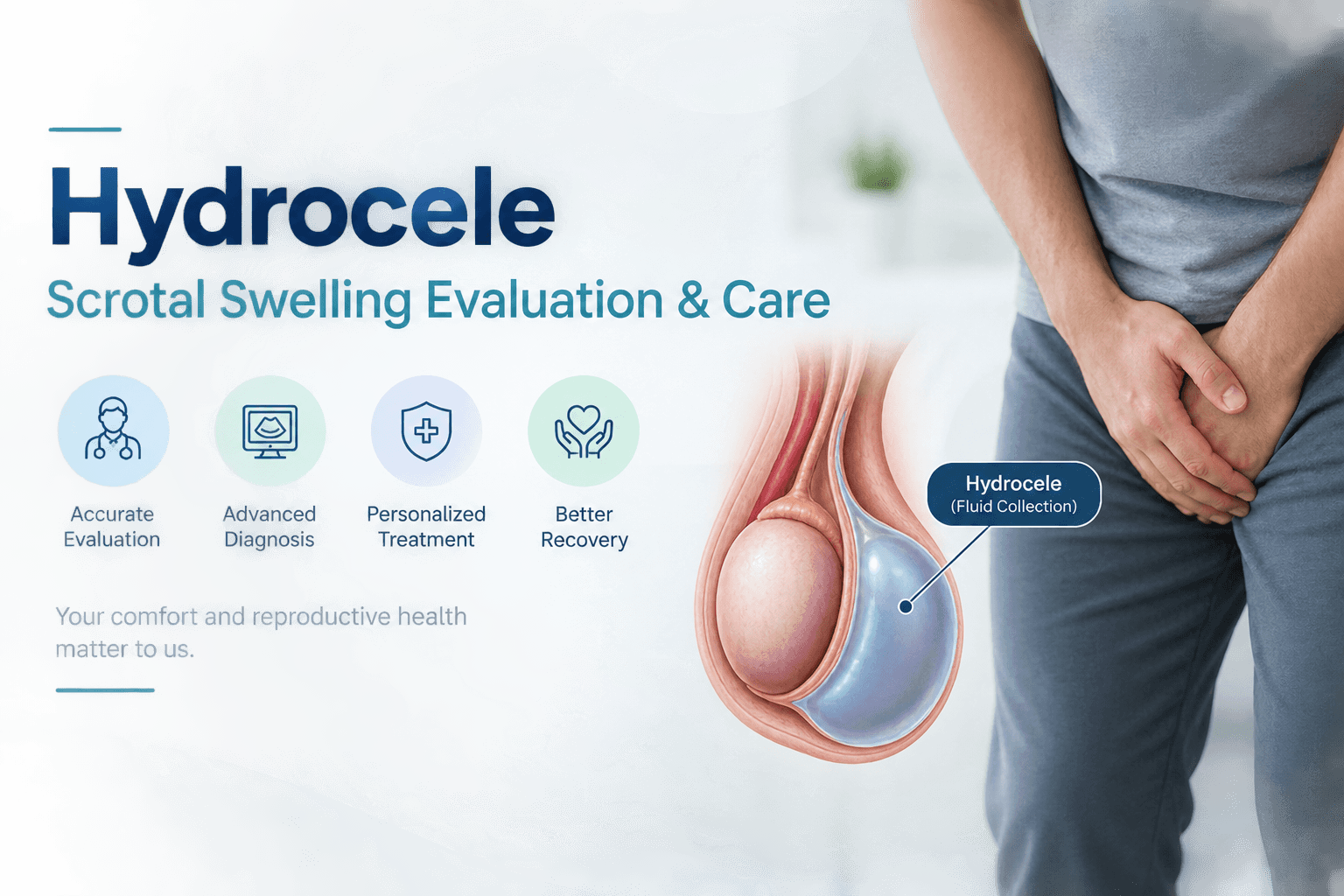
How Does Hydrocele Occur?
A hydrocele develops when fluid accumulates in the sheath surrounding the testicle (tunica vaginalis). It is usually painless and may develop on one or both sides due to inflammation, injury, or patent peritoneal connection.
Common feature: Smooth, painless scrotal enlargement
Types of Hydrocele
Communicating Hydrocele
Open connection between abdominal cavity and scrotum allowing fluid movement.
Non-Communicating Hydrocele
Closed peritoneal connection with fluid trapped in the tunica vaginalis.
Hydrocele of the Cord
Fluid collection along the spermatic cord rather than surrounding the testicle.
Secondary / Reactive
Develops following testicular inflammation, trauma, or infection.
Symptoms
- Painless swelling and enlargement of the scrotum
- Sensation of heaviness, fullness, or dragging discomfort
- Difficulty or discomfort when sitting, walking, or during activity if large
Causes
Physical & Medical Factors
Incomplete closure of processus vaginalis • Testicular inflammation or infection (epididymitis) • Scrotal trauma or injury
Common Questions & Medical Clarity
QIs hydrocele dangerous?
Most hydroceles are not dangerous, but any new scrotal swelling should be evaluated to rule out other testicular conditions.
QDoes hydrocele cause pain?
A hydrocele is usually painless, although large ones can cause heaviness and pressure.
QDoes hydrocele always require surgery?
No. Small, painless hydroceles can often be monitored under medical supervision.
Hydrocele Care in Coimbatore
At Kovai Health Center, patients can discuss their health and fertility concerns in a professional, respectful, and 100% confidential environment.
No 526, 2nd Floor, Fathima Manzil, Opp to Kattoor Police Station, Nehru St, Gandhipuram, Coimbatore - 641 018.